
Pike Fishing for Beginners
Introduction
Pike fishing offers one of the most thrilling experiences available to UK freshwater anglers. As the apex predator of our lakes, rivers, drains, and canals, the northern pike (Esox lucius) is famous for its explosive strikes, camouflage markings, and formidable jaw packed with razor-sharp teeth. Watching a pike float suddenly bob and plunge beneath the water surface is a heart-pounding moment that keeps anglers returning season after season.
While pike are formidable predators, they are surprisingly delicate creatures out of the water. Their impressive jaws and sharp gills require specialized handling techniques and specific protective gear to ensure both angler and fish remain safe. For beginners, learning how to target, unhook, and release these fish correctly is just as important as knowing how to hook them.
Whether you are looking to try lure fishing on your local canal or set up deadbaits on a quiet lake, this comprehensive guide covers everything you need to start pike fishing safely and successfully in the UK.
Essential Gear and Tackle for Pike Fishing
Targeting a powerful predator demands robust equipment. Standard light coarse tackle is completely unsuited for pike, as line snaps and bent hooks leave fish trailing dangerous rigs. Using balanced predator tackle ensures you can land fish quickly without exhausting them.
Rods, Reels, and Lines
A dedicated pike rod typically measures 11ft to 12ft in length with a test curve between 2.75lb and 3.25lb. This provides the backbone needed to cast heavy deadbaits or strike effectively at long range. For lure fishing, a shorter, stiffer 7ft to 8ft lure rod rated for casting lures up to 50g is ideal.
Pair your rod with a sturdy size 4000 to 6000 fixed-spool reel loaded with either 15lb to 20lb monofilament line or 40lb to 50lb braided line. Braid is particularly popular for predator angling because it has zero stretch, providing direct feedback when a pike hits a lure and making hook sets effortless.
The Wire Trace: Non-Negotiable Protection
Pike have over 300 needle-sharp teeth that can sever standard monofilament or fluorocarbon line instantly. Every single pike rig must include a wire trace.
A proper wire trace should be at least 18 to 24 inches long and made from 30lb breaking strain flexible wire. The trace features a strong swivel at the top end to attach to your main line and either a snap swivel (for lures) or a semi-barbed treble hook setup (for deadbaits) at the bottom.
Popular Pike Fishing Methods
There are two primary ways to catch pike in the UK: deadbaiting and lure fishing. Both methods are extremely effective and suit different seasons and styles of angling.
Deadbaiting Techniques
Deadbaiting involves using dead sea or coarse fish suspended beneath a float or resting on the bottom. Sea baits like mackerel, herring, sardine, and smelt are exceptionally popular because their oily skin releases a strong scent trail through the water column.
The two main deadbait rigs are:
Pike Float Rig: A large, buoyant float holds the deadbait at a set depth. This method is visually exciting and works brilliantly on shallow lakes and canals.
Ledger Rig: A weight holds the deadbait firmly on the lakebed or riverbed. This is the go-to setup for deep waters, strong river currents, or cold winter days when pike stay glued to the bottom.
Lure Fishing
Lure fishing is an active, mobile tactic where you cast artificial imitations and retrieve them through the water to trigger a predator's strike reaction. It is particularly effective during autumn and spring when water temperatures are mild and pike are actively hunting.
Common lure types include:
Soft Plastics: Rubber fish imitations that swim with a realistic tail action.
Crankbaits and Plugs: Hard plastic lures with a diving lip that wobble through mid-water.
Spinners and Spoon Lures: Metallic lures that flash and create heavy vibrations, drawing strikes in murky water.
Essential Fish Care and Unhooking Equipment
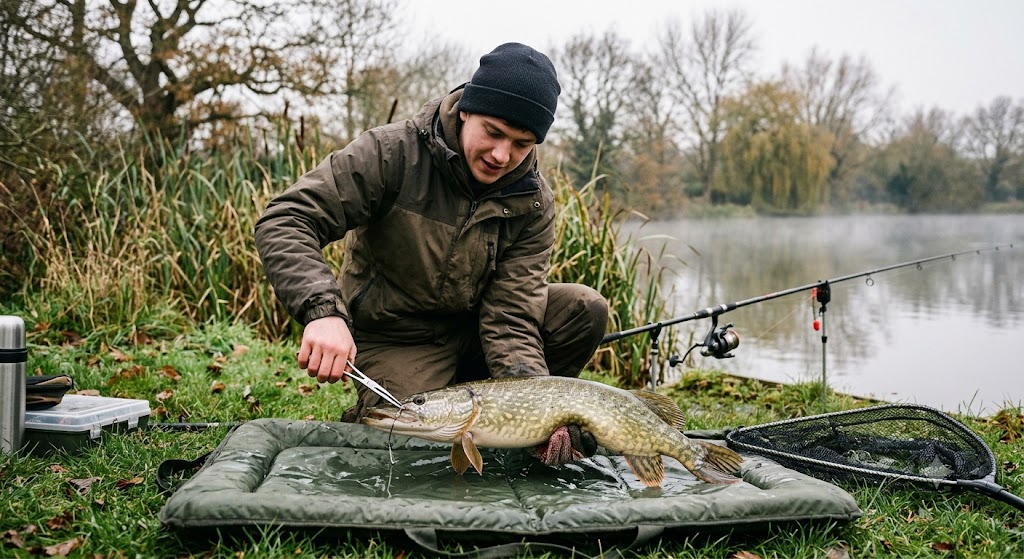
Before you ever cast a line for pike, you must have the correct unhooking tools ready at your side. Pike cannot be handled like standard coarse fish, and failing to unhook them quickly can harm the fish.
Always bring the following key safety items:
Extra-Long Forceps: At least 10 to 12 inches long for reaching treble hooks safely inside the mouth.
Side-Cutters: Heavy-duty wire cutters capable of snipping thick treble hooks if a rig becomes awkwardly caught.
Large Unhooking Mat: A well-padded mat to protect the pike's slime coating and body while on the bank.
Paddled Unhooking Glove: Optional leather or chainmail protective gloves to protect your hands from gill rakers while learning.
Large Triangular Landing Net: A soft-mesh net measuring at least 36 to 42 inches across to accommodate long fish safely.
Practical Tips for Immediate Success
Strike Promptly: When your float plunges or your indicator moves, strike within seconds. Waiting too long leads to deep hooking, which makes hook removal difficult and dangerous for the fish.
Learn the "Chin-Slide" Hold: Slide your fingers gently under the gill cover (avoiding the spiky rakers inside) up toward the tip of the lower jaw. Tilting the jaw upward naturally prompts the pike to open its mouth wide for easy hook removal.
Keep Your Mobile Gear Light: Pike are territorial predators. If a spot produces no action within 30 minutes, pack up your lure or deadbait kit and move 50 yards down the bank.
Fishery Approved Trebles: Use semi-barbed treble hooks (where only one point is barbed to hold the bait, while two are barbless). This makes unhooking smooth and fast.
Rest Fish Before Release: Hold the pike upright in the water facing the current for a few minutes until it regains its strength and swims away powerfully on its own.
Common Mistakes to Avoid
Fishing Without Wire Traces
Never fish for pike or use small lures in waters holding pike without a wire trace. Main line snaps lead to trailing hooks that prevent fish from feeding properly.
Using Undersized Tackle
Attempting to catch pike on standard match or light float gear leads to snapped lines and exhausted fish that struggle to recover after landing.
Delaying the Strike
Many traditional myths suggest waiting for a "second run" before striking a pike bite. This is outdated and unsafe advice that frequently results in deep hooking. Always strike as soon as the line tightens or the float sinks.
Frequently Asked Questions
What is the best time of year to go pike fishing in the UK?
The traditional UK pike season runs through autumn and winter, from October to March. During these colder months, aquatic weed dies back, water clarity improves, and pike feed heavily on oily deadbaits to conserve energy.
Can I catch pike on artificial lures in cold winter water?
Yes, but you need to adjust your retrieve speed. In cold water, a pike's metabolism slows down drastically. Retrieve soft plastic lures or spoons very slowly near the riverbed or lakebed, pausing frequently to give sluggish pike time to strike.
How do I safely unhook a deeply hooked pike?
If a hook is caught deep in the throat or gills, do not pull forcibly on the trace. Gently open the gill cover to access the hook through the gills with long forceps or use heavy side-cutters to snip the hook wire or barbs directly. Once cut, the hook slips out easily without causing tearing or damage.
Are pike safe to catch on commercial carp lakes?
Many commercial carp waters hold large pike but always check the specific fishery rules before targeting them. Many venues enforce strict guidelines regarding trace lengths, unhooking gear, and permissible bait types to protect their fish stocks.
Conclusion
Pike fishing is one of the most adrenaline-fueled branches of UK angling, combining active watercraft with the excitement of targeting a true freshwater hunter. By investing in heavy-duty tackle, always using a reliable wire trace, and mastering safe unhooking techniques, you can enjoy this rewarding sport while protecting these striking predators for future generations. Prepare your gear, keep fish care at the top of your priority list, and head out to your local canal or lake. Be sure to check back with the Procastangling.com blog for more predator tactics, seasonal guides, and expert tackle advice.