
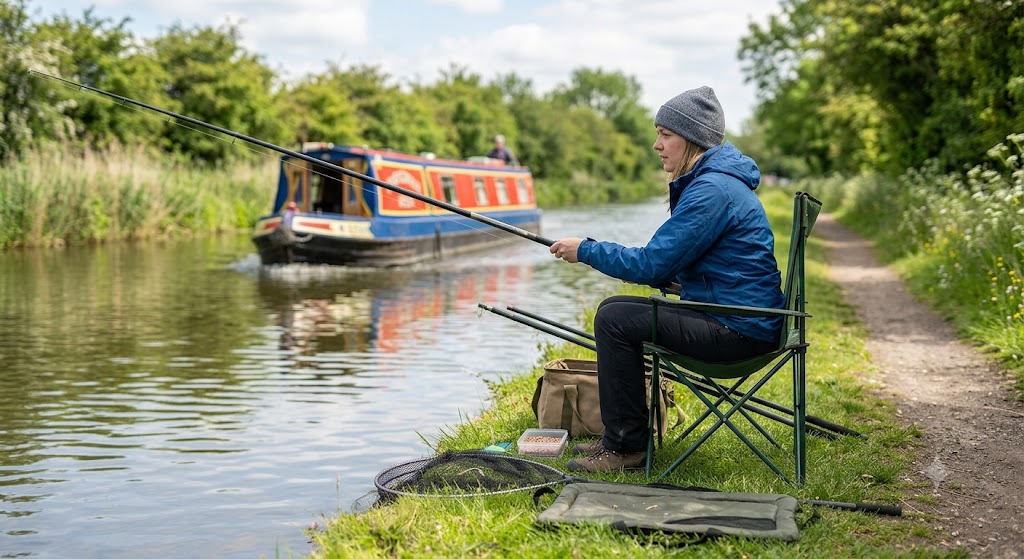
Canal Fishing for Beginners
With over 2,000 miles of historic waterways meandering through bustling cities, sleepy villages, and picturesque countryside, Britain’s canal network offers some of the most accessible angling in the country. Constructed during the Industrial Revolution, these shallow, slow-moving cuts are now teeming with a rich variety of coarse fish species.
Canal fishing represents urban and rural angling at its very best. Whether you are targeting delicate roach, silver bream, hungry perch, or hard-fighting carp and pike, canals offer a relaxed environment ideal for honing your watercraft. Unlike massive reservoirs or wide rivers with heavy currents, canals are bite-sized, predictable, and manageable for anglers of all skill levels.
The beauty of fishing the towpath lies in its low barrier to entry. You do not need expensive long-range casting equipment or complex rigs. A simple, lightweight float setup or whip is all you need to start catching fish within feet of the bank, making canal angling exceptionally budget-friendly and convenient.
This comprehensive guide breaks down everything you need to know about starting your canal fishing journey in the UK. From understanding canal features to choosing lightweight tackle, mastering baiting strategies, and practicing proper etiquette along public towpaths, you will gain the confidence needed for a successful bankside session.
Essential Tackle and Setup for Canal Angling
Canals are typically narrow—often between 10 and 15 yards wide—and relatively shallow, averaging 3 to 5 feet deep in the main channel. Because you are fishing at close range in clear, slow-moving water, heavy tackle will only spook wary fish. Lightweight, delicate gear is the key to success.
Keeping your setup simple allows you to stay mobile, moving along the towpath until you find an active shoal of fish.
Choosing the Ideal Rod, Whip, or Pole
For a complete beginner, a light 10-foot to 11-foot float rod paired with a small 2500-size fixed-spool reel is an excellent starting point. Spool your reel with a fine, supple monofilament main line rated between 3 lb and 4 lb breaking strain. This light line allows you to cast tiny floats effortlessly and presents your hookbait naturally.
Alternatively, many canal anglers prefer using a short margin pole or a telescopic whip measuring 4 to 6 metres. Whips do not use a reel; instead, line is tied directly to the rod tip. They offer incredible accuracy, allowing you to drop your bait onto the exact same spot every single cast with zero noise or splashing.
Understanding Canal Float Rigs and Depths
A traditional canal cross-section resembles a shallow "U" or boat hull shape. It features a shallow margin shelf near the towpath, a deeper central channel (known as the "track" or "boat channel"), and a sloping far-shelf leading to the far-bank vegetation.
A delicate waggler float or a lightweight pole float taking small lead shot (such as No.8 or No.10 split shot) provides sensitive bite indication.
The Mainline: Fine 3 lb to 4 lb monofilament line.
The Float: A lightweight 2BB or 3BB insert waggler, which features a thin tip to detect subtle, sensitive bites from silverfish.
Shotting Pattern: Space tiny split shot evenly down the line (a "shirt-button" pattern) to allow your hookbait to fall slowly and naturally through the water column.
The Hooklength: A 12-inch section of light 2 lb line attached to a fine-wire barbless hook ranging from size 18 to 22.
Top Canal Baits and Watercraft
Because canals are inhabited by a wide variety of coarse species, choosing versatile baits ensures you attract everything from small gudgeon to quality perch and bream.
Adapting your tactics to water clarity, boat traffic, and underwater features will dramatically increase your catch rate.
Essential Canal Baits That Catch Everything
Pinkies and Squatts: Tiny variations of standard maggots. Pinkies (small red maggots) are the absolute best bait for keeping canal fish feeding continuously without filling their bellies.
Casters: Crisp, dark brown pupae of maggots. Casters are a deadly bait for targeting larger, quality canal roach, chub, and tench.
Bread Punch: White bread squeezed flat and cut into tiny discs using a brass punch tool. Bread creates a brilliant visual target in murky or cold canal waters.
Chopped Worm and Hempseed: A classic combination for perch and tench. Diced earthworms release rich scents into the water, while crunchy hempseed mimics small freshwater snails.
Damp Canal Liquid/Groundbait: Fine dark groundbait mixed with water creates a subtle cloud on the canal bed, drawing fish in without spooking them in clear water.
Reading Canal Features and Boat Traffic
Fish on canals naturally seek out cover, shade, and food-rich features. Focus your efforts on natural holding spots:
Moored Boats and Barges: Fish love hiding underneath narrowboats where overhead cover offers protection from predators like herons and cormorants.
Locks and Bridges: Stone bridge pilings and lock tail races create deeper water and oxygenated pockets where predatory perch and chub gather to ambush prey.
Overhanging Far-Bank Reeds: Overhanging bushes and reed beds along the offside (far bank) are prime feeding zones for shy fish away from towpath foot traffic.
Be prepared for canal boat traffic. When a boat passes through your swim, do not panic—simply wind in your rig, let the boat pass with a friendly wave to the captain, and re-feed a small pinch of bait once the water settles. Boat propellers stir up the canal bed, dislodging food that often triggers a feeding frenzy!
Practical Tips for Bankside Success
Plumb the depth meticulously: Use a small plumb weight on your hook to find the exact depth of the flat central track and the slopes of the margins. Setting your float so the bait just touches the bottom is crucial for canal species.
Feed 'little and often': Canal fish fill up quickly in small volumes of water. Throw just 4 to 6 maggots or a thimble-sized pinch of groundbait into your swim every two minutes to keep fish searching competitively for food.
Ship back carefully on public towpaths: When using a long pole or whip, always look behind you before pulling sections back onto the towpath to avoid tripping walkers, cyclists, or runners.
Use dark groundbaits in clear water: Light-coloured groundbait forms a bright patch on a dark canal bed that shy fish fear crossing. Choose dark brown or black groundbait mixes to blend in naturally.
Keep your shadow off the water: Because canals are shallow, fish can easily see movement on the bank. Sit low on your seatbox or stool and avoid wearing brightly coloured clothing.
Common Beginner Mistakes to Avoid
Avoiding a few common mistakes will save you from frustrating tangles and help you land more wary canal fish.
Over-Baiting the Swim
Dumping large balls of heavy groundbait into a shallow canal will instantly ruin your spot. Heavy feeding saturates the small volume of water, filling the fish up rapidly. Always start with tiny amounts of bait and only increase the feed if you are catching fish rapidly.
Fishing Too Heavy
Using thick lines (6 lb+), large floats, and big hooks on a canal will result in fewer bites. Canal fish have plenty of time to inspect your bait in still water. Refining your tackle down to fine lines and small barbless hooks makes your presentation look natural and unthreatening.
Ignoring the Nearside Margin
Many beginners assume they must cast straight across to the far bank to catch fish. In reality, the shallow margin right under your own feet along the towpath wall is often packed with perch and gudgeon searching for fallen insects and food scraps.
Frequently Asked Questions
Do I need a licence and permit to fish on UK canals?
Yes. Anyone aged 13 or over, fishing on UK canals must hold a valid Environment Agency rod licence. Additionally, you need permission from the venue controller. Many canal stretches are managed by local angling clubs offering cheap day tickets or annual memberships. For un-leased canal stretches managed by the Canal & River Trust, you can fish using their affordable Waterway Wanderers permit.
What species of fish can I expect to catch in a canal?
UK canals host a vast array of freshwater species. You will most commonly catch roach, perch, bream, gudgeon, rudd, and ruffe. Many canals also hold surprisingly large carp, tench, chub, and predatory pike.
Can I go canal fishing during the spring close season?
In most cases, yes. Unlike public rivers, the majority of UK canals are classified as stillwaters and remain open for fishing all year round. However, a small number of canal stretches connected directly to rivers may observe the statutory close season (15th March to 15th June), so always check local signage before fishing.
What is the best time of day to fish a canal?
Early morning around dawn and late afternoon into dusk are generally the best times for canal angling. Towpath traffic from cyclists and pedestrians is lowest during these periods, and fish feed more confidently in low-light conditions.
Conclusion
Canal fishing is a delightful, accessible, and deeply satisfying way to enjoy angling right on your doorstep. By using light, balanced tackle, feeding sparingly, and learning to read subtle towpath features, you unlock miles of peaceful British waterways waiting to be explored.
Remember that canal angling is all about finesse, patience, and observation. Take time to enjoy the unique wildlife along the bank, adapt your tactics as conditions change, and celebrate every bite.
To discover more practical guides, rig breakdowns, and expert bankside advice, be sure to keep exploring the Procastangling.com blog for all your angling inspiration.