
Multiplier Reels Explained: Master Your Casting Today
For many anglers, the sleek profile of a multiplier reel can feel a little intimidating. Unlike standard fixed-spool reels, where the line unravels freely over the edge of a stationary spool, a multiplier features a spool that actively rotates during the cast. This mechanical design offers unparalleled direct contact with your line, incredible cranking power, and superior casting distance when mastered. Whether you are aiming to punch a lead over the surf on a windswept UK beach or looking to twitch heavy lures for specimen pike on a local canal, understanding how multipliers work will elevate your angling game.
While they have a reputation for being difficult to master, modern engineering has made multiplier reels more accessible than ever. This guide breaks down the mechanics, setups, and adjustments needed to fish with absolute confidence.
Deconstructing the Multiplier: How It Works
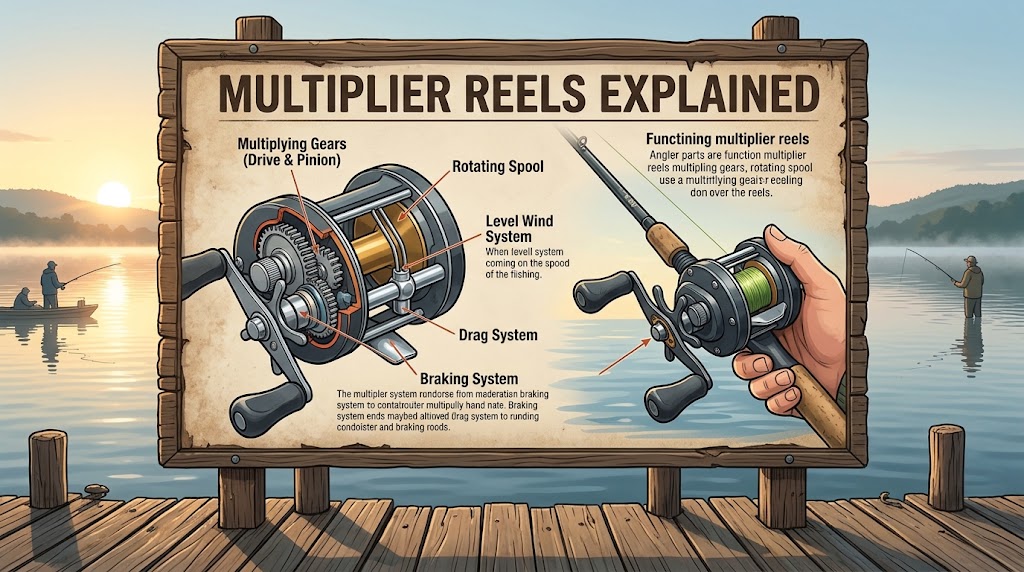
The defining feature of this reel style is its gear ratio, which explains the name itself. When you turn the handle once, the internal gearing multiplies that single rotation to turn the spool multiple times. This allows for rapid line retrieval, which is essential when dragging a heavy sinker through a fast-running tide or pulling a hard-fighting fish away from dense underwater snags.
Because the spool spins on internal bearings during a cast, it creates far less friction than a fixed-spool reel. This lack of friction is the secret behind the massive distances achieved by sea anglers. However, because the spool spins independently, it requires careful management to ensure it does not spin faster than the line leaving the rod rings.
Key Features and Braking Systems
Centrifugal Braking Systems
Centrifugal brakes rely on small, internal plastic weights called blocks that sit on pins inside the side plate. When you cast, the high-speed spinning of the spool forces these blocks outward against a braking ring, slowing the spool down during the first half of the cast when energy is highest. This system is incredibly reliable for traditional sea angling and shore casting with heavy weights.
Magnetic Braking Systems
Magnetic brakes use a dial on the outside of the reel casing to adjust how close a set of magnets sits next to the metal spool. Turning the dial alters the magnetic resistance, allowing you to fine-tune the reel instantly without taking it apart. This system is perfect for lure fishing or casting in fluctuating headwinds, where you need to make rapid adjustments on the bank.
How to Set Up a Multiplier Reel and Avoid Overruns
The dreaded 'birds-nest'—or overrun—happens when the spool spins faster than the line is flying through the air, resulting in a chaotic nest of tangled line. Preventing this requires calibrating your spool tension knob correctly before making your first cast.
Start by attaching your chosen lead or lure to the end of your line and holding your rod out horizontally at eye level. Press the spool release button while keeping your thumb lightly resting on the line. Slowly adjust the mechanical tension knob until the weight drops steadily to the floor; the moment the weight hits the ground; the spool should stop spinning instantly. If the spool keeps turning after the weight lands, tighten the knob and try again.
Practical Tips
Always use your thumb as a manual brake by lightly feathering the edge of the spool right before your tackle hits the water to prevent an overrun.
Walk your line out across a field or football pitch when spooling up for the first time, winding it back on under firm, consistent tension to prevent bed-in tangles.
Clean your spool bearings with a drop of high-quality, lightweight reel oil every few sessions to maintain smooth casting performance on saltwater beaches.
Choose a high-visibility monofilament line when learning, as it makes watching the line trajectory and identifying early loops much easier.
Start with your magnetic or centrifugal brakes set to maximum restriction, gradually backing them off as your casting rhythm and confidence improve.
Common Mistakes to Avoid
The most frequent mistake beginners make is attempting to cast a multiplier with a sharp, aggressive snapping motion. A violent cast will cause the spool to accelerate far too quickly, instantly creating a massive overrun. Instead, use a smooth, progressive overhead sweep that allows the rod to load up gradually and forces the spool to accelerate evenly.
Another common error is overfilling the spool with line. While a full spool looks great, filling a multiplier right to the very brim increases the overall weight and inertia of the rotating spool, making it significantly harder to control during a cast. Leave a safety gap of roughly two to three millimetres below the spool lip.
Frequently Asked Questions
What is the difference between a multiplier reel and a baitcaster?
While they operate on the same rotating-spool principle, baitcasters are generally smaller low-profile reels designed specifically for one-handed casting with lighter artificial lures. True multipliers are typically round-profile, heavy-duty reels built for distance sea casting, deep-sea boat angling, or heavy pike fishing.
Should I use monofilament or braided line on my first multiplier?
It is highly recommended to start with a good quality monofilament line between 15lb and 18lb strain. Monofilament is much more forgiving than braid, stretches slightly to absorb minor casting errors, and is vastly easier to untangle if you happen to get a birds-nest.
Can I use a multiplier reel on a standard fixed-spool fishing rod?
No, you should use a dedicated multiplier rod. Multiplier reels sit on top of the rod blanks rather than underneath them, which means the rod guides are spaced closer together to prevent the line from rubbing against the carbon blank when the rod bends under pressure.
What does a level-wind system do on a multiplier reel?
A level-wind is a mechanical guide that moves back and forth across the front of the reel automatically as you retrieve line. This ensures the line lays perfectly flat and evenly across the spool, removing the need for you to manually guide the line back on with your thumb.
Conclusion
While multiplier reels require a small learning curve, the benefits of enhanced power, direct bite registration, and superior distance control make them a phenomenal tool for any UK angler. By understanding your reel's braking options and practicing smooth casting arcs, you will unlock a whole new level of angling potential. To discover more tackle tutorials, angling guides, and expert setups, keep exploring the Procastangling.com blog.