
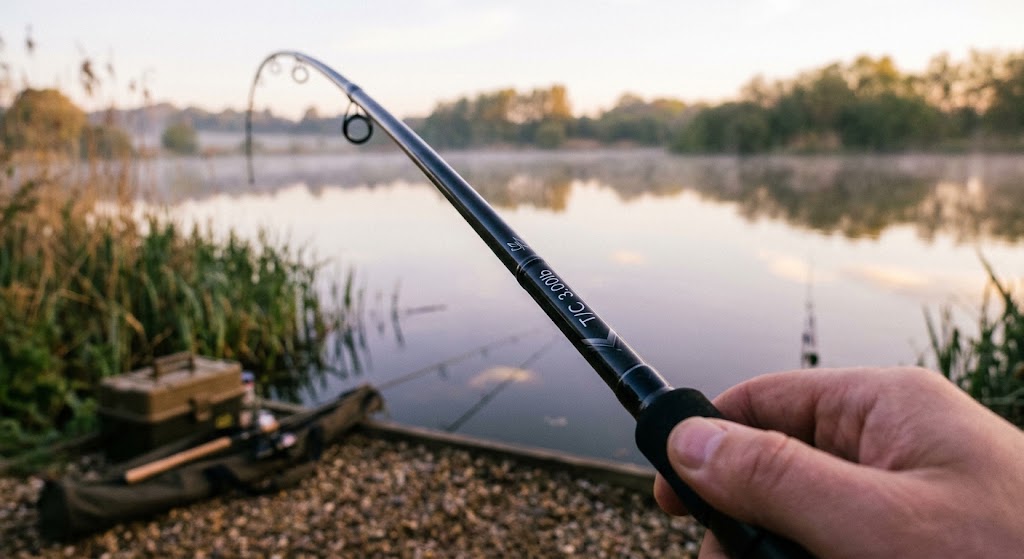
Choosing the right fishing rod can often feel overwhelming, especially when faced with technical terms and numbers printed on the blank. Among these, the test curve is one of the most critical figures you will encounter, yet it remains one of the most misunderstood.
Whether you are setting up for your first carp session or seeking to tweak your pike rig for larger venues, understanding rod test curves is essential. It directly influences how far you can cast, the size of lead or feeder you can use, and how well you can control a fish during the fight. This comprehensive guide breaks down test curves in clear, practical terms to help you choose the ideal rod for your angling style.
What Is a Rod Test Curve?
In simple terms, a rod's test curve measures its stiffness and power. Technically, it is the amount of weight required to bend the tip of a fishing rod to a 90-degree angle relative to the butt section when the rod is held horizontally.
For instance, if a rod requires a 2.75lb weight suspended from the tip to create that right-angle bend, it is rated with a 2.75lb test curve. It is important to note that a test curve does not represent the maximum weight line you can use or the heaviest fish you can catch. Instead, it offers a reliable indicator of the blank’s power and casting dynamics.
How Test Curve Differs from Action
Anglers often confuse a rod's test curve with its action, but they describe two entirely different characteristics. While the test curve indicates overall strength and stiffness, the action describes where and how the rod bends under pressure.
Through Action (Progressive): The rod bends smoothly along its entire length, offering exceptional fish-playing cushioning and forgiving performance under the rod tip.
Middle Action: The rod bends primarily from the middle upwards, providing a balanced blend of casting power and playing control.
Fast Action (Tip Action): Only the top section bends under light to moderate loads, allowing for rapid recovery and long-distance casting power.
Two rods can possess the exact same 3.00lb test curve, but if one features a through action and the other a fast action, they will handle casting and fish-playing completely differently.
Choosing the Right Test Curve for Your Angling
Selecting the optimal test curve depends on the species you target, the venue size, and the weight of your end tackle. Matching your rod correctly ensures smoother casting and prevents line snapped on impact or lost fish.
Test Curves for Coarse and Specialist Angling
For lighter coarse fishing and targeting species like chub, barbel, or tenancy, lower test curve ratings provide maximum feel and sensitivity.
0.75lb to 1.25lb: Ideal for delicate float fishing, light ledgering, and roving on small streams or rivers.
1.50lb to 1.75lb: The classic river barbel and chub rod rating. Powerful enough to hold bottom in moderate currents with leads up to 2oz–3oz.
2.00lb to 2.25lb: Perfect for heavy river feeder fishing, floodwater barbel angling, or targeting specimen tench and bream at distance.
Test Curves for Carp and Pike Angling
Modern carp and pike angling requires stiffer rods capable of throwing heavy leads, PVA bags, and large deadbaits significant distances.
2.75lb to 3.00lb: The all-round workhorses for UK carp venues. Excellent for small to medium waters, casting leads between 2oz and 3.5oz, and providing an enjoyable fight.
3.25lb to 3.50lb: Built for long-distance casting, heavy PVA bag work, and large open venues or fast-flowing big rivers.
3.75lb+ and Spod/Marker Rods: Dedicated heavy-duty blanks designed specifically for baiting up with heavy spods, Spombs, or feature finding.
Calculating Maximum Casting Weight
A practical rule of thumb helps convert your rod's test curve into its optimum casting weight range. Multiply the test curve (in pounds) by one to find the ideal lead weight in ounces.
For example, a 3.00lb test curve rod will comfortably cast a 3oz lead at maximum efficiency. You can safely cast slightly above or below this baseline, but casting significantly heavier leads risks overloading the carbon fibre blank during heavy casts.
Practical Tips
Match rod power to venue size: Use lighter test curves (2.50lb–2.75lb) for intimate estate lakes, and reserve heavy 3.50lb blanks for massive reservoirs or long-range venues.
Factor in PVA bags: Always include the weight of filled PVA bags or feeders when calculating your total casting weight to avoid overloading your rod blank.
Prioritise playing action over distance: Unless you regularly fish beyond 100 yards, a softer test curve will yield far fewer hook pulls near the net.
Common Mistakes
Overpowering your venue: Beginners often buy 3.50lb test curve rods assuming "stronger is better," resulting in stiff, lifeless rods that easily pull hooks out of fish at close range.
Underpowering for heavy leads: Using a light test curve rod to cast heavy leads or large PVA bags causes the blank to compress fully, leading to poor casting accuracy and potential rod breakage.
Confusing casting weight with test curve: Assuming a 2.75lb test curve means you can safely cast a 2.75lb lead lead block. Always remember test curve measures bend force, not casting payload.
Frequently Asked Questions
What is the best all-round test curve for UK carp fishing?
A 3.00lb test curve rod is widely considered the ultimate all-rounder for UK carp waters. It balances enjoyable fish-playing action on small to medium venues with enough power to cast 3oz leads and PVA bags over 80 yards when necessary.
Can I use a higher test curve rod for small fish?
Yes, you can physically catch small fish on heavy test curve rods, but the experience will be far less enjoyable. Stiffer rods lack the spring and forgiveness needed for small fish, increasing the risk of hook pulls and line snapped under sudden lunges.
Does a higher test curve mean a rod can cast further?
Generally yes, because a higher test curve blank is stiffer and recovers faster, enabling it to cast heavier leads into high winds. However, casting technique, line diameter, and rod action play equally vital roles in reaching maximum distance.
How do I find the test curve rating on my rod?
Manufacturers print the test curve details directly onto the rod blank just above the handle section or reel seat. Look for markings such as "T/C 2.75lb" or "Test Curve: 3.00lb."
Conclusion
Understanding rod test curves removes the guesswork from selecting angling tackle. By matching your rod's test curve to your target species, lead weights, and venue size, you dramatically improve casting accuracy, rig presentation, and fish handling safety.
Equipping yourself with the correct tackle foundation makes every moment on the bank more rewarding. Be sure to explore the rest of the Procastangling.com blog for more expert guides, rig breakdowns, and practical advice to elevate your angling success.