
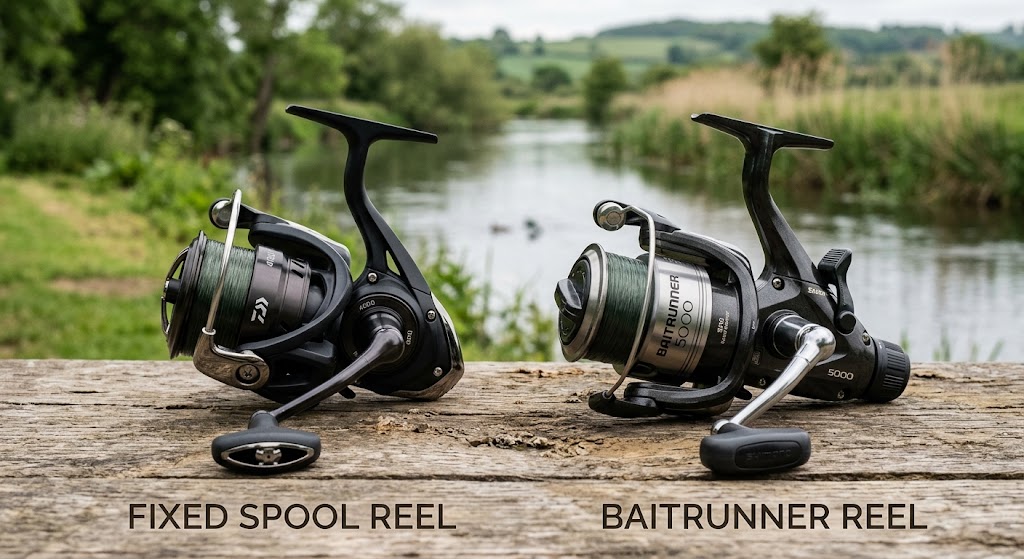
Fixed Spool vs Baitrunner Reels: Which Is Right for You?
Choosing the right reel is one of the most critical decisions an angler can make. Whether you are setting up on a quiet canal for silverfish or targeting heavy barbel on a churning river, your reel dictates how smoothly you cast, control line, and play fish.
Two of the most popular reel choices among UK coarse and carp anglers are standard fixed spool reels and free-spool baitrunner reels. While they share similar basic mechanics, their internal drag systems and operational styles serve distinctly different angling scenarios.
This guide will break down the mechanics, benefits, and practical applications of fixed spool vs baitrunner reels. By understanding how each design functions, you will easily identify the perfect reel for your personal fishing style.
Understanding Fixed Spool Reels
A fixed spool reel features a stationary spool around which a rotating bail arm wraps line during retrieval. Because the spool itself does not rotate during casting, line spills smoothly off the front edge, minimizing tangles and allowing for effortless distance casting.
How Front and Rear Drag Systems Work
Standard fixed spool reels rely on a single primary drag mechanism, located either at the top of the spool (front drag) or at the base of the reel body (rear drag).
Front drag models utilize larger felt or carbon washers directly inside the spool housing. This offers exceptional stopping power, silky-smooth adjustment, and long-term durability when playing energetic species like carp or tench. Rear drag systems are slightly easier to adjust during a fight but feature smaller drag washers, offering slightly less maximum resistance.
Ideal Scenarios for Standard Fixed Spool Reels
Standard fixed spool reels shine in active, hands-on angling methods:
Float and Match Fishing: Perfect for trot-fishing on rivers or waggler fishing on commercial fisheries where quick line pickup and light weight are essential.
Lure Fishing for Pike and Perch: Constant casting and retrieving demand a lightweight, responsive reel with a reliable front drag.
Light Feeder and Canal Fishing: Ideal when targeting smaller species where instant bite detection requires your rod to be held or closely monitored.
Understanding Baitrunner Reels
A baitrunner reel—often referred to as a free-spool or twin-drag reel—is a specialized variation of the fixed spool design. It features two independent drag systems controlled by a rear lever.
How the Dual Drag System Operates
The genius of a baitrunner reel lies in its dual-adjustment capability. The main front drag is set tight to hook and play fish securely. Meanwhile, engaging the secondary rear baitrunner lever disengages the main drag and engages a secondary, ultra-light tension setting.
When a fish takes your bait and runs, line pulls freely off the spool with minimal resistance, preventing your rod from being dragged off the rests. The moment you turn the reel handle forward, the secondary mechanism automatically disengages, instantly switching back to your main fighting drag so you can strike and land the fish safely.
Ideal Scenarios for Baitrunner Reels
Baitrunner reels excel in stationary ledgering and feeder techniques where powerful fish take aggressive runs:
Carp Fishing: Essential for specimen carp angling, allowing fish to pick up heavy boilies or Method feeders and run without dragging expensive tackle into the lake.
Barbel Fishing on Rivers: Powerful river barbel hit baits with immense speed. A baitrunner prevents line snaps and lost rods in heavy current.
Deadbaiting for Pike: Gives predatory fish initial freedom to turn and swallow a deadbait without feeling heavy resistance on the line.
Comparing Key Features: Fixed Spool vs Baitrunner
Choosing between these two designs comes down to weight, control, and target species.
|
Feature |
Standard Fixed Spool Reel |
Baitrunner (Free-Spool) Reel |
|
Drag Mechanics |
Single primary drag system |
Dual independent drag systems |
|
Overall Weight |
Lightweight and compact |
Heavier due to internal gearing |
|
Bite Protection |
Manual line release or loose main drag |
Automatic free-spool engagement |
|
Best For |
Active float, lure, and light feeder work |
Stationary specimen carp, barbel, and pike |
Practical Tips for Anglers
Match Reel Size to Rod Balance: Pair 3000 to 4000 size fixed spool reels with float and light feeder rods. Save larger 5000 to 8000 baitrunner reels for specimen carp and barbel setups.
Set Your Free-Spool Tension Carefully: When using a baitrunner in fast-flowing rivers, tighten the secondary free-spool drag just enough to prevent the current from pulling line off the spool naturally.
Adjust Main Drag Before Casting: Never start fishing without testing your main fighting drag by hand. It should yield line smoothly under firm pressure without slipping too easily.
Disengage the Baitrunner Before Striking: While turning the handle automatically disengages the free-spool function, getting into the habit of turning the handle rather than striking aggressively prevents sudden line snaps.
Common Mistakes and How to Avoid Them
Leaving Standard Fixed Spools Tight in Rests: Leaving a standard fixed spool reel tight while feeder fishing for barbel or carp often results in broken hooklinks or lost rods. If using a standard fixed spool, back off the main drag slightly while waiting for bites.
Striking While the Free-Spool Is Engaged: Striking directly against an active baitrunner mechanism causes severe line overspill and birds-nest tangles inside the spool. Always turn the handle first to lock into the main drag before leaning into the fish.
Overloading Small Spools with Heavy Line: Spooling small fixed spool reels with heavy monofilament creates severe line memory and coils. Always use the line diameter recommended on the spool skirt.
Frequently Asked Questions
Can I use a baitrunner reel for float fishing?
While you can physically use a baitrunner for float fishing, it is far from ideal. Baitrunners are significantly heavier than standard fixed spool reels, leading to wrist fatigue during constant casting and holding of the rod.
Do I need a baitrunner reel for river barbel fishing?
While not strictly essential, a baitrunner reel is highly recommended for river barbel. Barbel takes are notoriously explosive, and the free-spool function protects your rod and line from catastrophic sudden lunges.
What size reel should I get for general UK feeder fishing?
A size 4000 standard fixed spool or compact baitrunner reel is the most versatile choice for general UK feeder fishing, balancing well on 10ft to 12ft feeder rods.
Is a front drag fixed spool better than a rear drag fixed spool?
Front drag reels generally offer larger micro-adjustable drag washers, providing smoother resistance and better durability when playing large fish compared to rear drag models.
Conclusion
Both standard fixed spool and baitrunner reels hold a crucial place in modern UK angling. Standard fixed spool reels offer unmatched lightness and simplicity for active float, lure, and light feeder work, while baitrunner reels provide essential peace of mind when targeting powerful specimen fish with stationary setups. Matching your reel design directly to your target species and fishing style will dramatically improve your control on the bank. For more practical tackle guides, expert rig advice, and seasonal angling tips, continue exploring the Procastangling.com blog today.